

Delegation is one of the most important leadership skills in a dental practice, yet it is also one of the most misunderstood, and many leaders lack awareness of their own approach. Too many leaders fear that delegating means losing control, lowering standards, or trusting others with tasks that feel too important to let go of. In reality, effective delegation is not about stepping back; it is about leading more intentionally, developing your team, and freeing yourself to focus on the work that only you can do.
Why?
When I ask people why delegation is important, most will respond that it frees up their time. This is true. There are several other important reasons too. Here are some reasons why delegation is so important:
- It frees you up. It allows you to focus on the things that only you can do and very importantly, it allows you to be more proactive and strategic in how you lead..
- Gives the other person confidence. By delegating something to somebody you are in essence saying that you have confidence and belief in them and their abilities..
- If you don’t delegate you are saying you don’t believe in them or trust them. The opposite is also true. If you don’t delegate to that person you are in essence saying you don’t believe or have confidence in them.
- You get the ideas and capability of the individual. By delegating you make it much more likely that you will get the ideas, capability and potential of that person.
- Inspires & motivates. Delegating well can increase ownership, engagement, and motivation.
- It reduces the load on you. Psychologically it can help reduce the feeling of load on your shoulders.
When it comes to delegation, it is not one size fits all. There is considerable nuance to delegating and it is a skill to be practised. Here is a method you can use to delegate more effectively. TEPAF.
Triage
Often missed out by people is the fact that we have to triage the task. Many of you may have seen the urgent and important matrix. This is the starting point. Where does it sit? How important is it? How urgent is it? It is extremely important that you take responsibility for triaging the task at this stage. If it is not important and not urgent then don’t do it and don’t delegate it to anybody!
Understanding where the task sits sets you up for the next steps and to delegate effectively.

Evaluate
At this point it is important to evaluate if this task can be performed by technology or somebody outside of your team/practice. If it is boring, time consuming and tedious, there will often be some form of technology that is available to do that task. In addition there may be businesses or people outside of the team who can do that more effectively. Evaluate these possibilities and decide if the task can in essence be outsourced.
Person – Who do you delegate the task to?
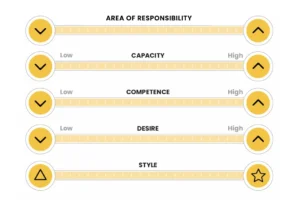
When deciding who to delegate to, there are some really important things to consider. Firstly, we often have one person who is our go to and we delegate everything to them. Be careful with taking this approach. It is high risk unless done appropriately.
- Area of responsibility. Where does this task fit in terms of overall area of responsibility?
- Capacity. What capacity does this person have right now to do this task? Be careful not to pile everything on to one person which can lead to overload and burnout. Look for other people who have space.
- Competence. What is the level of competence of this person to do the task? The person doesn’t have to be the most competent but it is important to be aware of this.
- Desire. How much will this person want to do the task? Understanding their level of desire to complete the task is important
- Style. What is their personality profile and how does this fit with the task you are looking to delegate.
Look at all these elements to help you decide who to delegate to as well as to then help you decide your approach.
Approach
Every time you delegate something to somebody I would always ensure you do the following:
- Explain why and the purpose
- Make sure it is time bound
- Check impact on current workload
- Agree follow up
- Welcome input
In addition to this you also need to adapt your approach according to the situation and according to who you are delegating to.
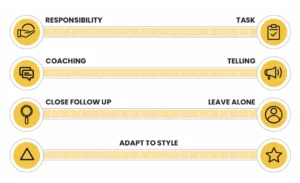
- Responsibility versus task. How much you give broader responsibility versus being specific about the exact tasks you want done.
- Coaching versus telling. How much you ask questions around the broader area of responsibility versus telling the individual exactly how to do it.
- Close follow up versus leave alone. How closely do you follow up with the person versus leaving them alone to get on with it and checking in less frequently.
- Personality profile. How do you adapt the way you communicate during your delegation to suit the personality profile of the individual.
Follow Up
You must ensure there is some kind of follow up. As above this will vary according to the situation and the person, but you must agree what the follow up is and then put it in the diary and ensure it happens.
Example

Imagine that you’ve noticed the number of new patients coming into your practice has dropped slightly over recent months. You may well be tempted to look into this yourself. But instead, you could delegate this task using the TEPAF approach.
- Triage. This is a very important task and it is medium to high on the urgency side of things. It needs somebody to do it.
- Evaluate. Can this be done by technology or somebody outside of the practice? Not really. Technology can certainly help but cannot undertake the task and giving it to somebody outside of the organisation would require a great deal of time briefing them and as it is central to the success of the practice this doesn’t make sense so it needs to be delegated to a team member.
- Person. Who is the best person to delegate this to? Ideally it would be delegated to somebody who already has that area of responsibility. For example, the TCO may have the overall responsibility of increasing new patients into the practice. It would make sense for it to sit within their area of responsibility. At the same time how much do you think they will want to do this? What is their likely competence in doing this? Are they naturally analytical and structured in their thinking?
- Approach. If you have chosen somebody who you think has a high level of desire, along with a naturally analytical approach and is likely to be highly competent, then give them the broader responsibility rather than giving them specific tasks. Ask them how they will approach it? What ideas do they have for how they will do this? Give them the overall result you are looking for but allow them to come up with how they will get there. Agree the follow up protocol.
- Follow up. Make sure you follow up as agreed.
Impact on your dental practice
Delegating effectively will have a massive impact on your dental practice if done well. Not only will it free you up to focus on the things that are most important, it will also inspire and motivate your team to really contribute to the practice.
This is why delegation is one of the key focus areas in the Certificate in Dental Practice Leadership, where we spend time helping leaders think about how to delegate effectively in the reality of themselves and their own practice. Click here to learn more about the Certificate in Dental Practice Leadership.