Emotional intelligence (EI) is a crucial skill for dental professionals. It impacts everything from patient care to team dynamics. It is vital for the success of your team and your dental practice.
This blog post takes key insights from our recent webinar and the broader information on developing emotional intelligence in dentistry and gives you five specific actions that you can take to develop your emotional intelligence.
What is Emotional Intelligence?
Emotional intelligence (EQ) is a relatively new concept that has gained significant attention since the 1990s. It goes beyond traditional measures of intelligence (IQ) to focus on our ability to understand and manage emotions.
Definitions of Emotional Intelligence
Several experts have defined emotional intelligence:
- Salovey and Mayer: “The ability to perceive emotion, integrate emotion to facilitate thought, understand emotions, and regulate emotions to promote personal growth.”
- Daniel Goleman: “Understanding and managing your own emotions and influencing the emotions of others.”
- WebMD: “The ability to recognize, understand, and manage your own and others’ emotions.”
Emotional intelligence is essentially about being proficient with emotions and thoughts. It allows us to process and manage our own emotions while understanding those of others.
Components of Emotional Intelligence
Daniel Goleman breaks down emotional intelligence into five key areas:
- Self-awareness: Understanding what drives and motivates us emotionally.
- Self-regulation: Having control over our own feelings.
- Motivation: Understanding our internal motivators and having an inner drive.
- Empathy: The ability to understand and share the feelings of others.
- Social skills: Effectively integrating all components to function well in social networks and teams.
Why is Emotional Intelligence Important in Dentistry?
Emotional intelligence is particularly crucial in leadership roles, including leading a dental practice. It enables dental professionals to:
- Engage better with staff members
- Improve delegation and team responsiveness
- Understand the unspoken emotions and concerns of team members
- Reach quicker conclusions and overcome barriers to communication
- Connect deeply with team members, encouraging them to go above and beyond
The Impact of Emotions on Thinking
It’s scientifically proven that emotions precede thoughts. This means our emotions can “hijack” our thinking, affecting our ability to think clearly. By understanding and managing our emotions, we can:
- Maintain clarity of thought in emotionally charged situations
- Help team members express their emotions constructively
- Navigate personal and professional challenges more effectively
Research on Emotional Intelligence and Performance
Daniel Goleman’s research on 180 large companies found that emotional intelligence was twice as important as IQ and technical skills in determining top performance. This highlights the significance of EI in professional success and is true of leadership roles within dental practices.
Five Ways to Develop Emotional Intelligence
1. Become Emotionally Literate
Emotional literacy involves the ability to describe and articulate your own emotions accurately. Many people struggle with this and don’t actually describe their emotional states. When asked how they feel, they may say something like, ‘I feel like that person has let me down’. This isn’t actually describing how they are feeling. What are they actually feeling? They are feeling disappointed because that person has let them down.
This is something we can work on. This isn’t just about negative emotions. Far from it. It is about articulating all your emotional states. How are you feeling at this very moment?
A good way of doing this is to choose a specific time of the day and to write down how you are feeling. A great way to help with this is to take a look at a feelings wheel to help you. This helps me articulate my emotions.
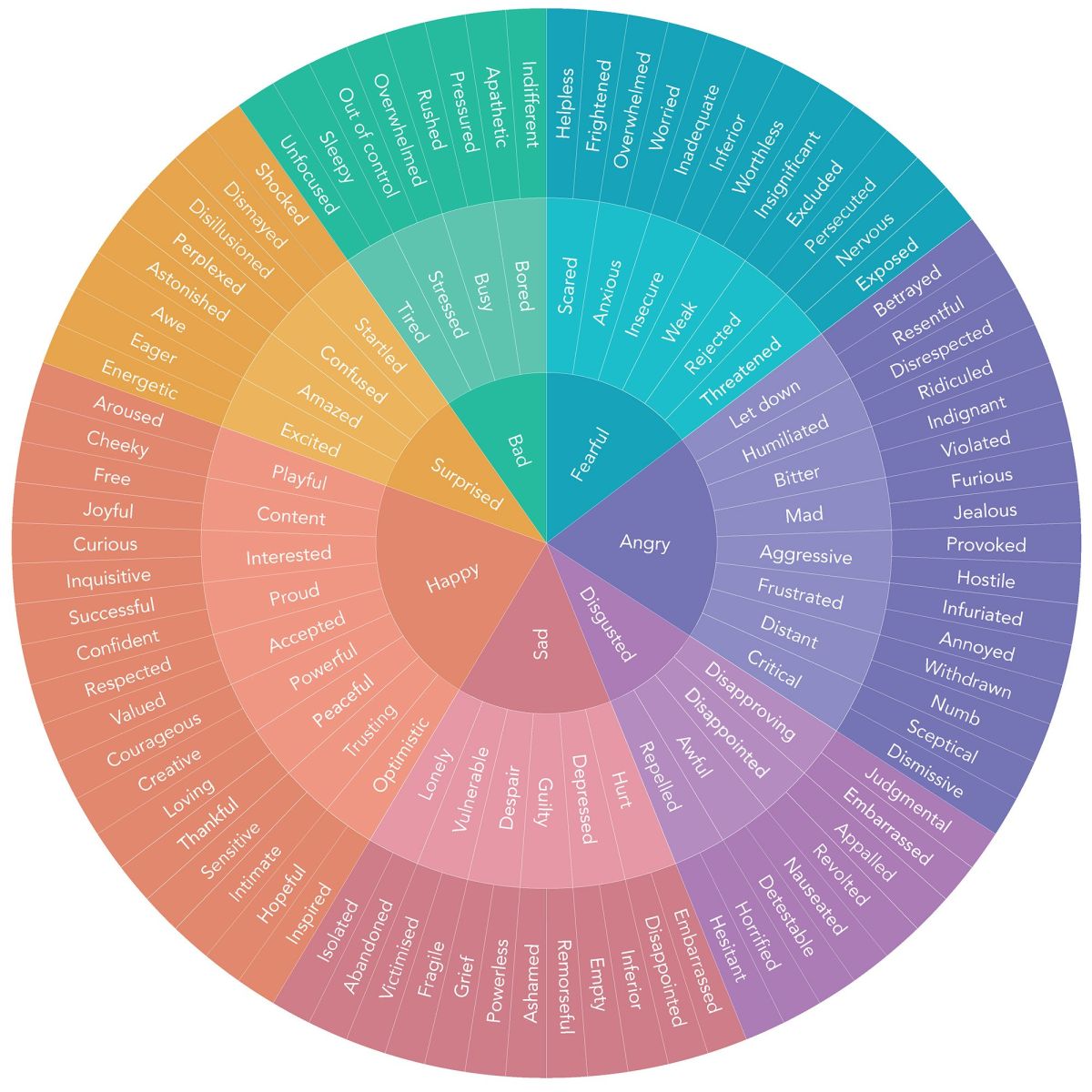
Brenne Brown talks and writes extensively on this topic. Click this link to download a useful PDF on different emotions we experience in different scenarios.
How does this help? Primarily, it enables us to be aware of our feelings and their potential impact on our actions and decisions. For example, we may be feeling really excited and optimistic. This could lead us to be overly optimistic and excited about a decision we make. In addition, it can help us move through feelings that perhaps are not very helpful. Purely expressing these emotions can help us move through something instead of keeping it inside and eating away at us. For example, we could feel really disappointed about a patient who has decided not to proceed with a treatment plan. Simply recognising this and articulating this will often enable us to move through it and into a more constructive emotional state.
In terms of the different areas of emotional intelligence, this will increase your self-awareness, improve your self-regulation and increase your empathy levels.
To improve emotional literacy:
- Regularly check in with your emotions
- Use tools like the “feelings wheel” to identify and name specific emotions
- Practice describing your emotional state in more detail. Write it down!
2. Do a personality profile
Personality profiles are a great tool for helping us see where our comfort zones are. The default areas that we go to. They also help us see how these areas can be very different compared to other people.
Understanding this can help us understand why our emotions may be what they are in certain situations. For example, if we are introverts, we may eventually need to spend time alone; otherwise, we may start to feel tired and irritated.
I am an Everything DiSC Partner and use the Everything DiSC Workplace Profile with people. It provides a simple and clear way of identifying your default approach while also understanding how we are all different. It uses adaptive testing, which means it follows different paths of questions based on how you answer them. As a result, people generally find it to be pretty accurate to their own views of themselves.
The report is very detailed and gives you an online platform where you can compare your style to those of your team, enabling you to keep it alive and being used.
One exercise you can do now is to answer the following 2 questions:
Are you more fast-paced and outspoken or more moderately-paced and reflective?
If it is the latter, you will likely fall in the lower half of the circle below, a C or an S. If it is the former, you will likely fall in the upper half of the circle, a D or an I. The second question is:
Are you more trusting and accepting or questioning and sceptical?
If it is the latter, you will likely fall in the right half of the circle below, an I or an S. If it is the former, you will likely fall in the left half of the circle, a D or a C.
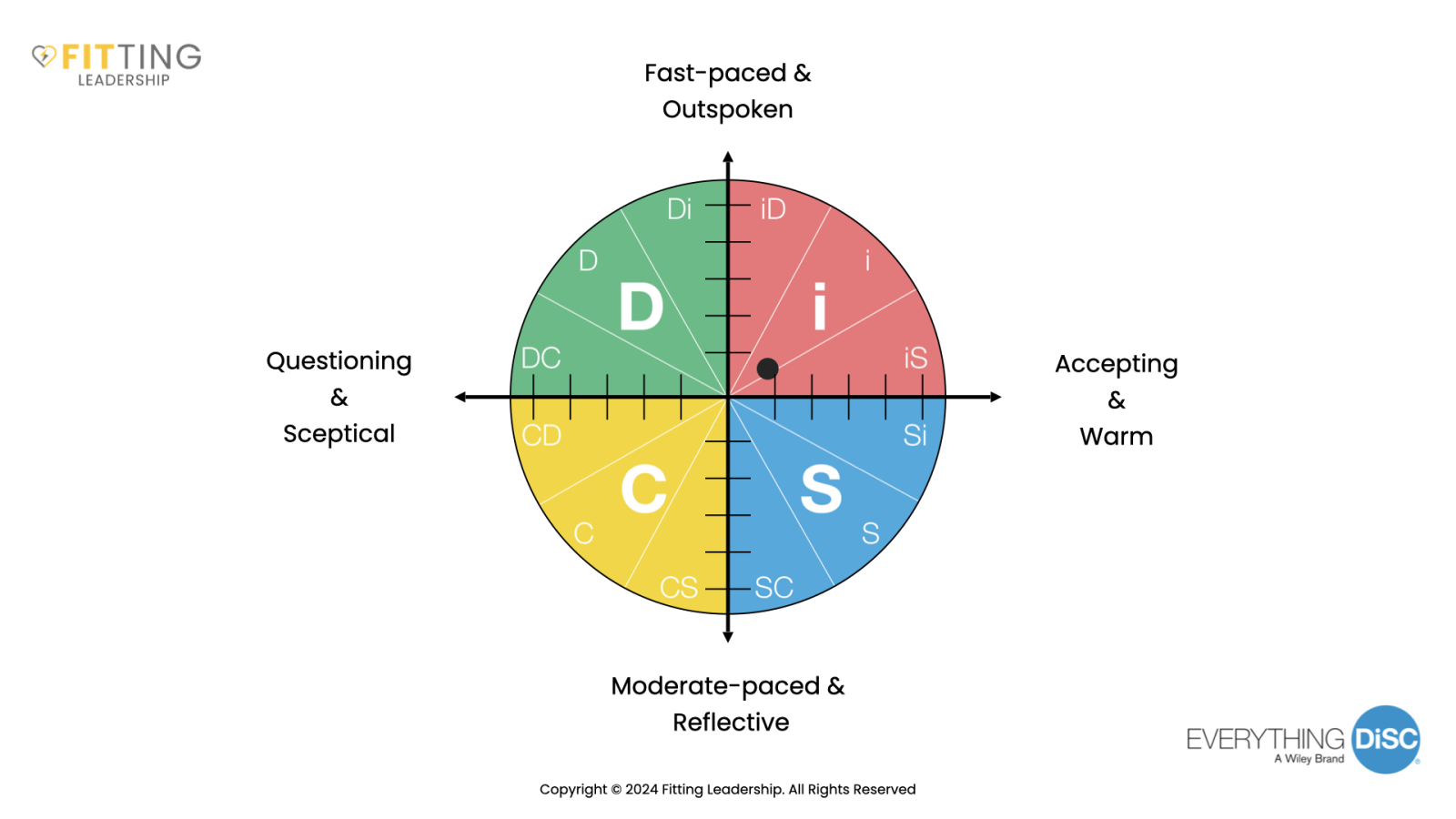
It is very important to remember that we are all a bit of everything and that we can all do everything. However, personality profiles help us recognize our default/comfort zone, which is where we primarily go. Working outside that comfort zone can cause us stress, which can affect our emotions.
Understanding your emotional patterns can help you manage your reactions more effectively. This involves:
- Identifying triggers that lead to certain emotional responses
- Recognizing how your emotions impact your behaviour and decision-making
- Developing strategies to manage recurring emotional challenges
3. Work on developing your intrinsic motivation
It is important to understand the different things that motivate us. One broad definition to understand is the difference between extrinsic and intrinsic motivation.
Extrinsic motivation is motivation that is driven by an external source. A classic example is money. People offer to pay us money to do something, and this can be a source of motivation.
Intrinsic motivation is where the motivation comes from within. We do things because they may be the ‘right’ things to do, and they may give us a real sense of fulfilment, excitement, or joy.
Intrinsic motivation provides a much more consistent level of energy than extrinsic motivation. Extrinsic reward or punishment can give us a short-term boost, but it typically doesn’t last. This means we can perform with more energy and more consistently, both in good times and in bad times, when high levels of resilience are required.
The more we understand our intrinsic motivators, the more we can create the conditions to tap into them.
For example, you may find that you really enjoy working with and developing your people. This provides you with a strong sense of fulfilment. Therefore, it makes sense that you give yourself the time and space to work with your team and help them develop and grow.
Click here to read this article on intrinsic versus extrinsic motivation.

You can explore your intrinsic motivation in several ways, including working on your values, purpose, and personal vision.
Many of you will know Simon Sinek for his work on purpose. His second book, Find Your Why, can help you understand and articulate your purpose.
Here are some good TED talks on purpose.
Having a coach can really help you clarify your purpose and develop your intrinsic motivation.
4. Develop Empathy
Empathy is a crucial component of emotional intelligence. This is especially true in a dental setting both for team members and patients. To enhance empathy, there are some skills to focus on, seemingly simple yet incredibly difficult to master and do all the time.

DO NOT INTERRUPT! This sounds simple, and it is, yet it is rare for people to do this consistently. We are forever talking over each other. As a leader, you have to really listen to your people. For more on this topic, see my previous article.
BE CAREFUL NOT TO OFFER SOLUTIONS TOO EARLY. We often forget that people want to be heard more than anything else. Immediately offering solutions when they might have already considered those possibilities can be annoying. Instead, be fully present, listen, and encourage them to discuss it further. Simply nodding your head with good eye contact and staying silent may often be enough to give them the space to continue discussing it and finding a solution for themselves. You could even check with the person before offering them any solutions. ‘I’ve got a couple of ideas that might help. Would you like to hear them?’
PAY ATTENTION TO NON-VERBAL CUES AND BODY LANGUAGE. What are you picking up from the other person? What is not being said based on their body language and non-verbal cues? If you notice something, gently bring it up with the person to see if this is true. Raise awareness of it.
5. Take time to reflect
Taking time to step back and reflect on specific situations, articulate the emotions you were experiencing, and explain what led to those emotions really helps us develop our emotional intelligence. It is part of becoming emotionally literate, as described earlier, and it helps us understand our emotional drivers.

Specific situations may lead to specific emotions within us. Once we are aware of this, we can take action to manage those emotions.
For example, if somebody is very assertive toward you, this could lead to backing down or running away from potential conflict, as it makes you feel Insignificant. Knowing this can help you stand up for yourself moving forward. You know this is uncomfortable for you, but you actually want to be able to cope with this situation in a positive but assertive way yourself.
There is obviously an overlap here with becoming emotionally literate.
I wrote an article previously on the importance of reflection more broadly.
Take time to reflect!
The Future of Emotional Intelligence in Dentistry
As technology advances and AI becomes more prevalent in various aspects of dentistry, emotional intelligence will likely become an even more distinguishing factor for successful dental professionals and practices. The ability to connect with patients and team members on an emotional level, manage team dynamics effectively, and navigate complex interpersonal situations will remain uniquely human skills that can stand your practice apart.
Conclusion
Developing emotional intelligence is an ongoing process that can significantly enhance your effectiveness as a dental practice leader. By becoming more aware of your own emotions, improving your ability to manage them, and enhancing your capacity to understand and influence others’ emotions, you can create a more positive, productive, and successful dental practice.
Remember, emotional intelligence is not just about being “nice.” In fact, it can be really hard to be with your emotions and those of the people you lead. Ignoring them is easy. Being with them can be very difficult and very rewarding. Either way, emotional intelligence is essential for effective leadership of your practice and for realising your personal and professional ambitions.